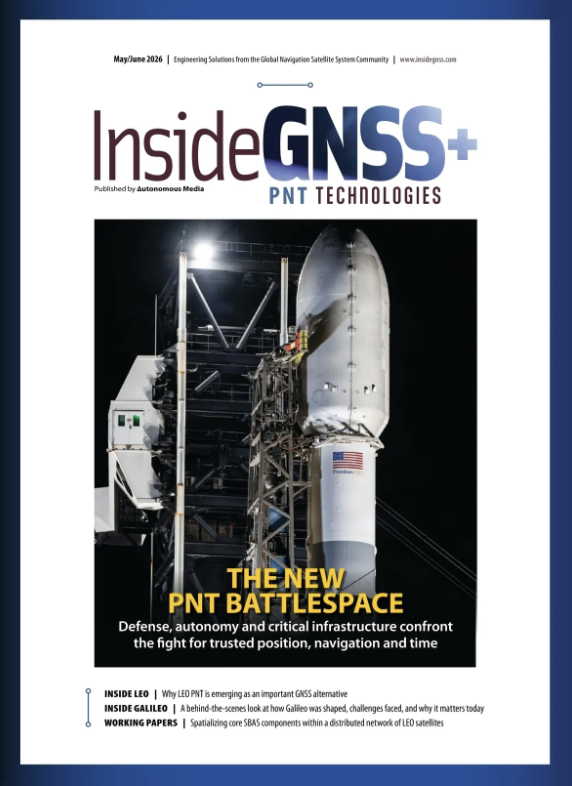
May/June 2026
Online News, Articles, and Features

Global Navigation Satellite Systems Engineering, Policy, and Design
Online News, Articles, and Features
GNSS interference is no longer a distant concern or a technical edge case. As jamming, spoofing and autonomy requirements expose the limits of today’s PNT architectures, LEO is emerging as one of the most important alternatives to understand.
Over the next six issues, Dr. Güenter W. Hein will critically review the development of Galileo, drawing on more than two decades of direct experience with Europe’s satellite navigation system. But this series is not simply a look back. Galileo’s history is also a study in geopolitics, technical ambition, institutional complexity, international cooperation, spectrum management and interoperability—issues that remain central to today’s global PNT aspirations.
The startup plans to launch its first demonstration mission on SpaceX’s Transporter 5 in May, with the goal of displaying high-quality commercial PNT LEO signals from a payload suitable for small satellite deployment.
Will the network, which some are still fighting, be ready for a September rollout, and if so, what are the implications for GPS and the people who rely on it?
Speakers at the 14th European Space Conference in Brussels discussed the need to defend EU assets against unfriendly attacks. Recent events in Eastern Europe would seem to lend force to such concerns, as the European Union makes headway toward the intersection of civil infrastructure and security and defense.
In 2017, the main message at the Munich Satellite Summit was clear: GNSS needs a backup. Nearly 10 years later, the message hasn’t changed; we may have more tools available but very little progress has been made—while the threat to GNSS only continues to grow.